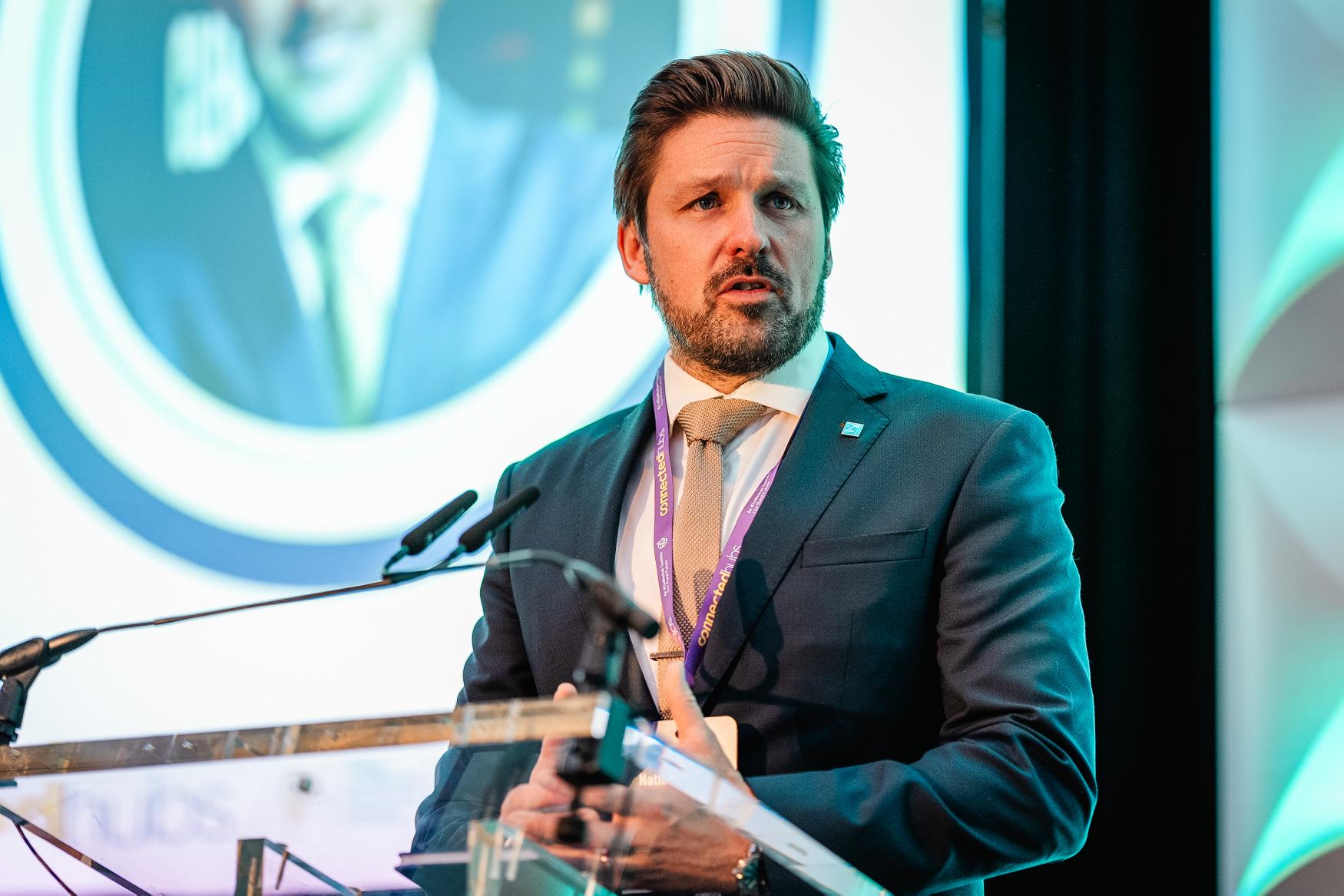
Allan Mulrooney, CEO of the Western Development Commission, reflects on five years of engagement with the Interceltic Business Forum, the power of regional collaboration and why connections between the Celtic nations matter more than ever.
Allan Mulrooney, CEO of the Western Development Commission, reflects on five years of engagement with the Interceltic Business Forum, the power of regional collaboration and why connections between the Celtic nations matter more than ever.
Across the Atlantic edge of Europe, regions such as Brittany, Cornwall, Wales, Scotland, the Isle of Man and the West of Ireland share more than cultural heritage. They share similar economic ambitions, similar challenges and a belief that strong regional economies are built through collaboration, innovation and community.
For Allan Mulrooney, CEO of the Western Development Commission (WDC), the Interceltic Business Forum has become an important place where those ideas are exchanged.
Ahead of this months gathering on the Isle of Man, he reflects on the importance of these connections, the progress made across the West of Ireland over the past year and why diaspora networks and regional partnerships will play an increasingly important role in the future.
The Western Development Commission is a statutory regional development agency responsible for supporting economic and social development across the West and North West of Ireland.
Our work spans several areas. We invest directly in companies through the Western Investment Fund, we carry out research and policy analysis on regional development, and we deliver initiatives that help communities and enterprises thrive. One of the best known of these is the Connected Hubs network which now links hundreds of remote working hubs across Ireland.
At its core the role of the WDC is quite simple. We work to ensure the West of Ireland remains a place where people can build companies, develop careers and sustain vibrant communities.
That means supporting indigenous enterprise, strengthening regional innovation ecosystems and ensuring that opportunities available in major cities can also exist in regional towns and rural areas.
What keeps bringing me back is the simple power of connection.
The Interceltic Business Forum brings together regions that share more than just geography. The Celtic nations share cultural identity, strong regional economies, maritime connections and a long history of outward looking communities.
For the Western Development Commission, the forum has been an incredibly valuable platform to connect the West of Ireland with partners across Europe, the United States and the wider Celtic world. One early example of the kinds of connections that can emerge was meeting Hillary Beirne, Chairman of the St Patrick’s Day Parade in New York, at an Interceltic gathering. That introduction went on to open many doors for me in New York and showed how powerful these networks can be when they translate into real relationships.
Over the years I have attended gatherings in Lorient, in Cardiff, in Cornwall and of course when we hosted the forum in Galway. Each of those meetings has been about building relationships. Over the past five years we have also brought many of our own stakeholders and client companies into those conversations. Organisations such as Buymedia, Future Mobility Campus Ireland in County Clare and several of the hub managers from the Connected Hubs network have joined us at Interceltic events. Bringing those voices into the room is important because it allows companies and community leaders from the West of Ireland to connect directly with peers across the Celtic regions and explore new collaborations.
Another reason I keep returning is the commitment of Charles Kergaravat, the founder of the Interceltic Business Forum. I have worked with Charles for the past five years and his passion for bringing people together across the Celtic regions is remarkable. What makes it even more impressive is that the forum has largely grown from his own initiative and energy alongside his other work. That ability to connect people, ideas and regions is something I greatly admire, and it is something I want to continue to support by helping strengthen the network and encouraging others from the West of Ireland to get involved.
For me personally, the forum has always been about telling the story of the West of Ireland while also learning from others who are working to build strong regional economies.
Regional economies across Europe are facing many of the same questions.
How do we grow indigenous companies?
How do we retain talent?
How do we build communities that people want to live and work in?
When you bring together regions like Brittany, Cornwall, Wales, Scotland, the Isle of Man and the West of Ireland you quickly realise there is enormous value in sharing experience.
What works in one region can often inspire ideas in another.
Through the forum we have been able to share the work we are doing through the Western Investment Fund, through our Connected Hubs network and through projects like our television series Moving West. These are practical examples of how regions can support innovation while also strengthening community.
Equally we have learned a great deal from others about investment ecosystems, innovation policy and how regions tell their story on the global stage. A good example of that collaboration took place last December when we hosted an AI focused event in Dublin under the Interceltic umbrella, working alongside colleagues from the Scottish and Welsh Governments and with participation from OpenAI. The conversation explored how regions can adopt emerging technologies while ensuring innovation benefits communities and regional economies. Events like that show how the Interceltic network can move from dialogue to practical cooperation.
“Small regions grow stronger when they collaborate rather than compete.”
The past twelve months have been an important period for the organisation.
We launched our new five year strategy which sets out a clear roadmap for supporting enterprise, communities and regional development across the West and North West of Ireland.
Alongside that strategy we reached a number of milestones that we are very proud of.
The Western Investment Fund passed €100 million invested into companies and projects across the region, which is a remarkable achievement for a regional evergreen investment fund.
We also marked our 50th investment in the MedTech sector, reinforcing the West of Ireland’s position as one of the leading life sciences clusters in Europe.
Another significant milestone has been the continued growth of the Connected Hubs network, which recently reached 400 hubs across Ireland. That network is helping people live and work in their own communities while remaining connected to global opportunities.
Alongside these achievements we have also seen growing international interest in the region, whether through new EU partnerships, innovation collaborations or the expansion of the Connected Hubs model internationally.
Taken together these milestones reflect something quite simple. The West of Ireland is not just a beautiful place to live. It is a place where innovation, enterprise and community are working hand in hand.
The Isle of Man sits at the centre of a number of conversations that are increasingly important for Atlantic regions.
It has strong financial services and digital sectors, a growing maritime economy and a deep cultural heritage which it actively promotes through initiatives such as the Year of the Manx Language.
Looking at the programme there are several discussions that are particularly interesting, including conversations around artificial intelligence and multilingual innovation, sustainable finance and the growing value of natural capital.
For regions like ours on the Atlantic edge of Europe these are not abstract topics. They go to the heart of how regional economies evolve.
Understanding how island and coastal economies are positioning themselves in areas like maritime industries, tourism, sustainability and innovation is extremely valuable for all of us working in regional development.
We commissioned this research because diaspora engagement is often talked about but not always well understood.
The study, led by Dr Aisling Moroney from the WDC Policy team, looks at how communities across the West and North West of Ireland currently interact with their diaspora, who is involved in that work and where the opportunities lie.
From the outset the goal was not simply to ask whether diaspora engagement matters. We already know that it does.
Instead we wanted to understand what activity is already happening across the region, what works well, where there are gaps and what kinds of support might help communities build stronger global connections. The work is also taking place at an important moment in the wider policy context. Ireland’s new national Diaspora Strategy is currently being developed following consultations with diaspora organisations and communities at home and abroad, including through the Global Irish Survey. The WDC made a formal submission and attended consultation meetings with the Minister and his team as part of that process. The strategy is expected to be launched at the Global Irish Civic Forum in April 2026, and we see our regional research as a contribution to that wider national conversation.
What we are increasingly seeing is that diaspora engagement is no longer just about heritage or tourism. It is about talent networks, investment connections, mentoring and knowledge exchange.
Regions that organise those networks well can unlock enormous opportunity.
The Interceltic forum is a particularly fitting place to share some early insights because diaspora connections are such an important part of the Celtic world. Those at the forum will hear about this research first from Dr. Aisling Moroney.
Mary brings an extraordinary perspective to these conversations.
She is a serial technology entrepreneur and angel investor based in Donegal and has been deeply involved in building innovation ecosystems both in Ireland and across Europe.
Through Awaken Angels she helped establish Ireland’s first all female angel investment community. She also works with the European Innovation Council evaluating some of the most ambitious startup companies across the EU.
Having someone with Mary’s experience involved in discussions around innovation, investment and regional growth is hugely valuable.
She understands how regional ecosystems connect to global investment networks, and she is also deeply committed to ensuring regions like the North West of Ireland are part of that conversation.
It does, even when those events take place far from our shores.
One of the most immediate areas we monitor closely is energy markets. Instability in the Middle East can translate quickly into volatility in oil and gas prices which affects businesses, community organisations and infrastructure across rural regions.
Many rural enterprises, community facilities and hubs still rely on oil heating systems, so increases in energy prices can place real pressure on operating costs.
We also watch developments around European public spending priorities and EU funding. Periods of geopolitical tension can lead to shifts in how governments allocate resources, which is something regional development agencies need to stay alert to.
Another area we monitor is global supply chains. Companies across the Western Region operate within international manufacturing networks, particularly in sectors like MedTech and advanced manufacturing. Disruptions to shipping routes or logistics corridors can have knock on effects for those businesses.
From our perspective the response is not panic but preparedness.
We monitor developments carefully, maintain strong dialogue with companies across the region and continue to focus on strengthening the resilience of the regional economy through indigenous enterprise, innovation and community infrastructure.
That long term resilience is central to the WDC strategy.
It is shaping up to be a very busy year.
One of the events I am particularly looking forward to is our upcoming diaspora and innovation gathering in London called Plug Into The West. It will bring together founders, investors, creatives and members of the Irish diaspora who want to stay connected with opportunities across the West and North West.
Events like this help turn diaspora goodwill into real collaboration, investment and mentoring networks.
We are also preparing to announce a new investment summit in Galway later this year, bringing together founders, investors and policymakers to discuss the future of regional investment and the role that patient regional capital can play in supporting innovation.
Alongside these events we continue to invest directly in companies across the region through the Western Investment Fund, with more than €7 million expected to be invested into regional businesses this year.
We are also working across a number of European collaboration projects focused on innovation, regional development and sustainability, ensuring that organisations and communities in the West of Ireland remain connected to wider European networks.
Another area receiving increased focus for us is social enterprise, where we see enormous potential for organisations that combine economic activity with community impact. At the same time we are beginning work on new initiatives around the biochar sector, exploring how emerging climate focused industries could create new opportunities for rural regions.
Alongside those initiatives we are working with government partners on the development of Ireland’s first National Hubs Strategy, building on the success of the Connected Hubs network and positioning Ireland as a global leader in distributed working.
Because meaningful connections still happen when people meet in person with purpose.
In a digital world we sometimes underestimate the value of sitting in a room with people who share similar challenges and ambitions.
The Interceltic Business Forum creates exactly that environment. It brings together entrepreneurs, policymakers, investors and innovators from regions that understand the importance of place, culture and community.
Every year new partnerships emerge, new ideas are shared and new opportunities open up.
If anyone attending the forum would like to connect beforehand, I am always happy to hear from people working on new ideas, collaborations or regional initiatives. These events are at their best when they lead to real conversations and new partnerships.
The Celtic regions have always been outward looking places. Forums like this remind us that when we collaborate across those regions, the opportunities extend far beyond our individual borders.
And of course, some of the most valuable conversations do not always happen on stage. They happen over coffee between sessions, or over a drink or dinner in the evening. Those informal moments often spark the ideas and relationships that continue long after the event itself.
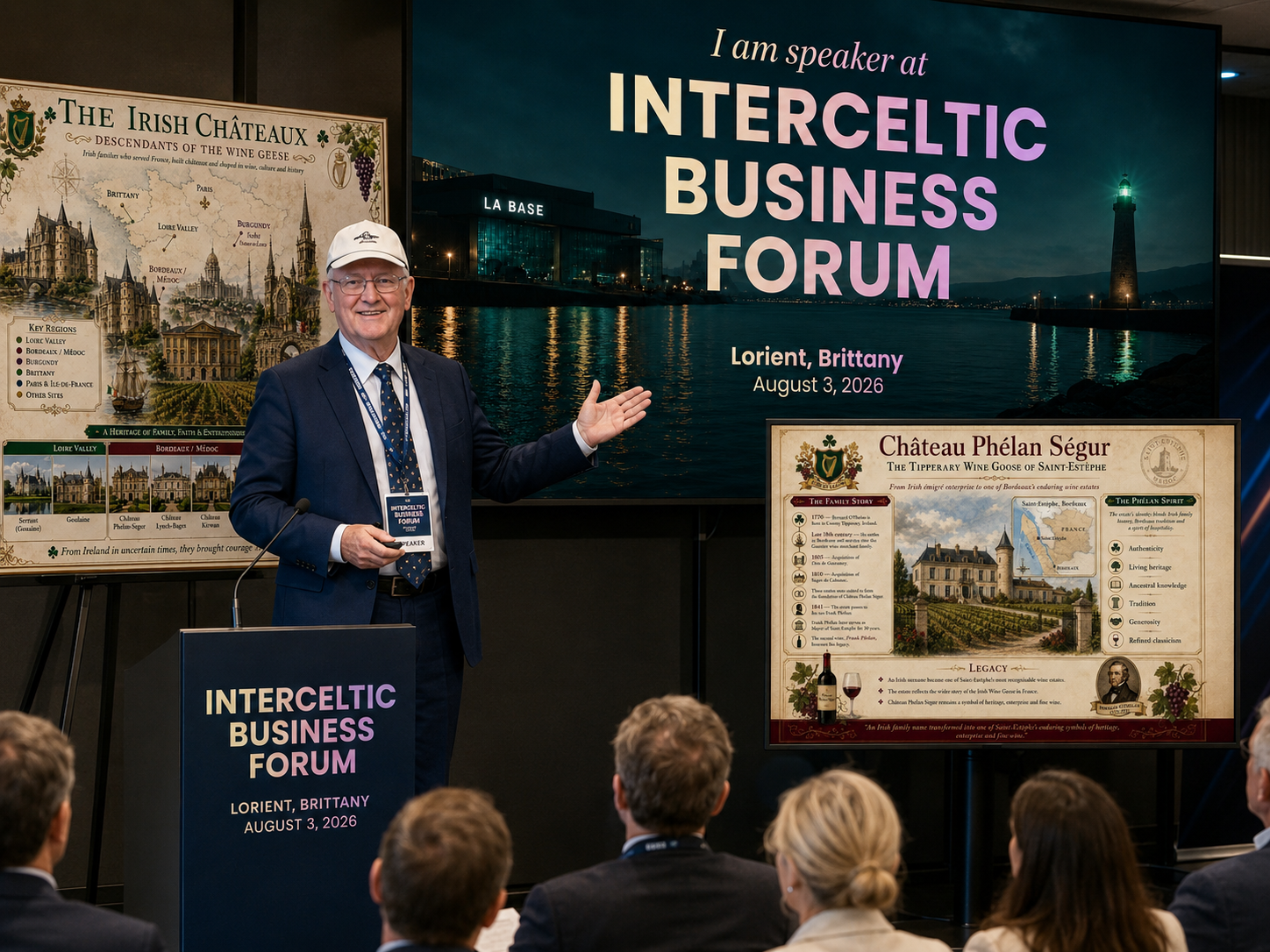
A pictorial history of the remarkable influence of Irish families and Irish châteaux on the French wine industry
Read More%20(1).jpg)
Irish fintech recognised for transforming digital customer experiences with no-code innovation and AI
Read More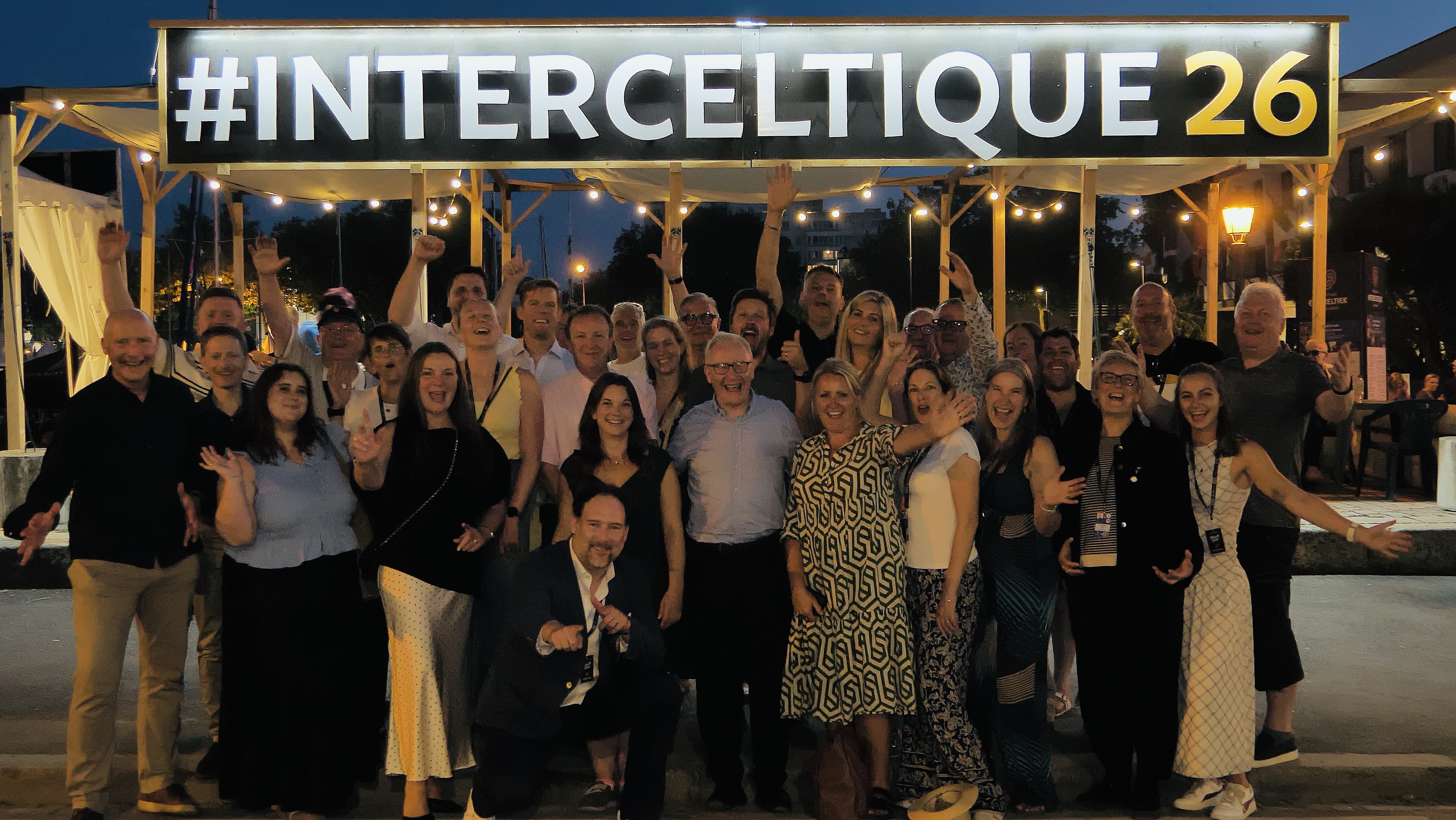
Discover the key insights from the 10th Interceltic Business Forum, where leaders from Brittany, Ireland, Cornwall, the Isle of Man and beyond explored AI, innovation, housing, regional growth and the power of collaboration.
Read More
The Interceltic Business Forum will return to Lorient on Monday, 3 August 2026 for its 10th edition, hosted at CCI du Morbihan during the Festival Interceltique de Lorient.
Read More


