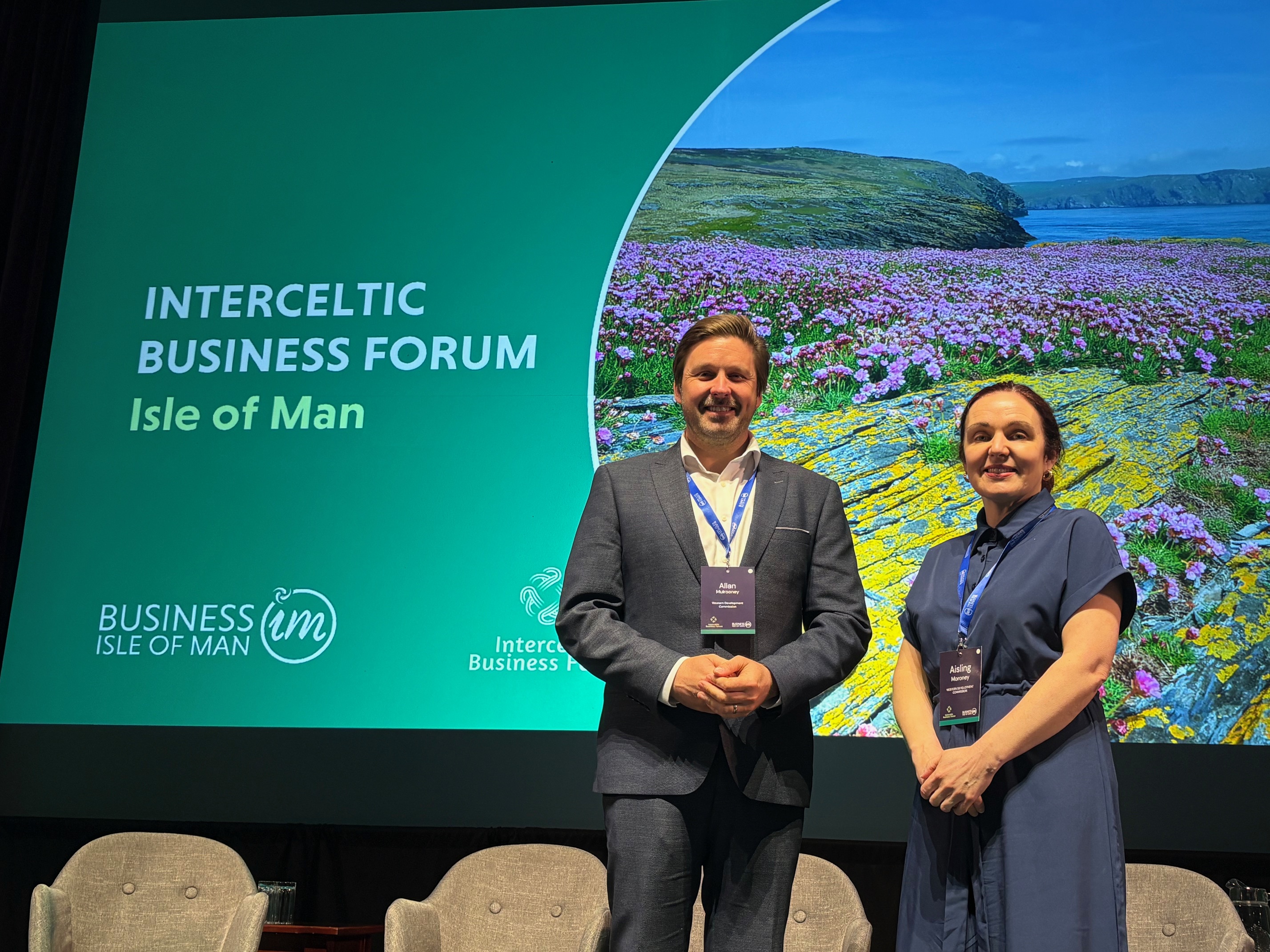
Aisling Moroney discusses new diaspora research, human connection, and what Celtic regions can learn from engagement in the west and northwest of Ireland.
As Policy Analyst at the Western Development Commission, Aisling Moroney is helping to uncover the real dynamics behind diaspora engagement in the west and northwest of Ireland.
At the Interceltic Business Forum on the Isle of Man, she shared early findings from new research showing that diaspora connections are built not only through policy and institutions, but through people, relationships, and everyday local effort.
In this interview, she reflects on what the research reveals, why human connection matters so much, and what other Celtic regions might learn from it.
This research began from a recognition that emigration has been a long-standing feature of life in the West and Northwest of Ireland and has really shaped the economic and social world of the region, including within family and community life. Through its work as a regional development agency, the Western Development Commission has long had a strong sense of the scale and value of the enduring relationships that continue to link people, families and communities in the West and Northwest with people in other parts of Ireland and across Britain, North America, Australia and many other parts of the world. What we now call ‘diaspora engagement’ provides a kind of in-built global connectivity that smaller or more peripheral regions often don’t possess or perhaps are only beginning to realise the value of.
Despite the scale of this diaspora story ,there had never been a comprehensive assessment of how diaspora engagement isactually happening within the region and out to the world. There search we undertook was designed to understand better who is doing this work, how they are doing it, what motivates them, what challenges they face, and what their success stories have been. Finally, were there supports or initiatives which could enable that work to become more coordinated, more effective, more sustainable?
The timing mattered because Ireland is entering a new phase of National diaspora policy with the launch of the Government’s Diaspora Strategy 2026–2030. We wanted to ensure that the distinct experience of the West and Northwest is reflected in that wider national conversation. In a time of great global flux and shifting political alignments, we also know that supporting efforts to build and maintain these kind of mutually beneficial connections and relationships is more important than ever.
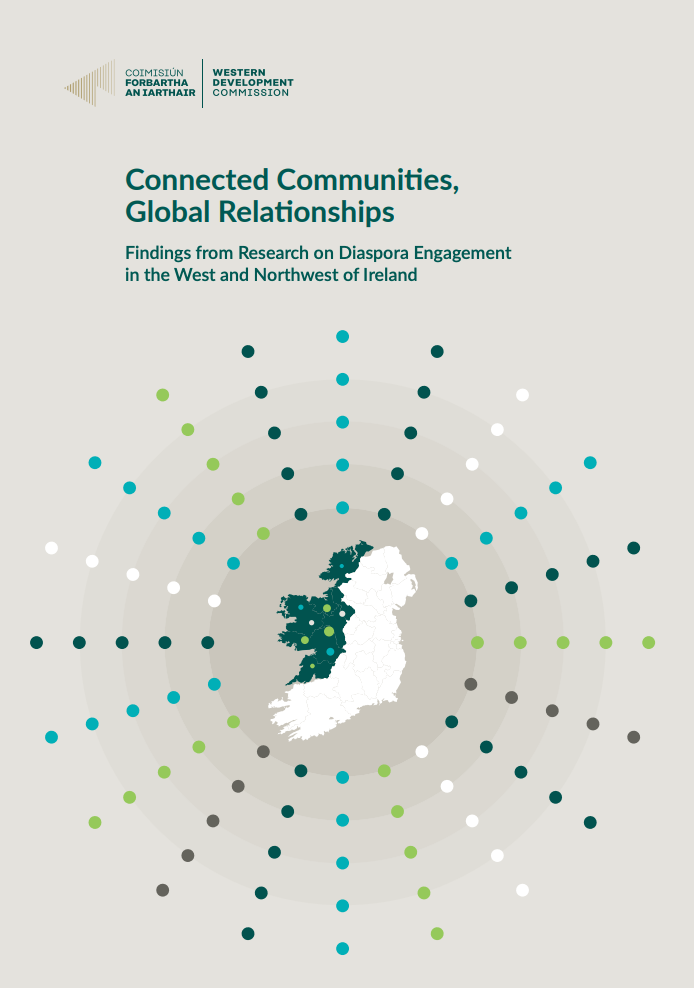
Several findings stood out, but probably the most important was that diaspora engagement is fundamentally relationship-led. The strongest motivation identified by respondents was maintaining bonds of friendship and connection, ranked ahead of fundraising or investment motivations.
Another striking finding was the sheer scale of activity already underway. Almost half of respondents said they already actively engage with the diaspora, and a further 35% said they would like to do more. That tells us the region is not starting from scratch. There is already a huge amount of goodwill, creativity and local initiative in place.
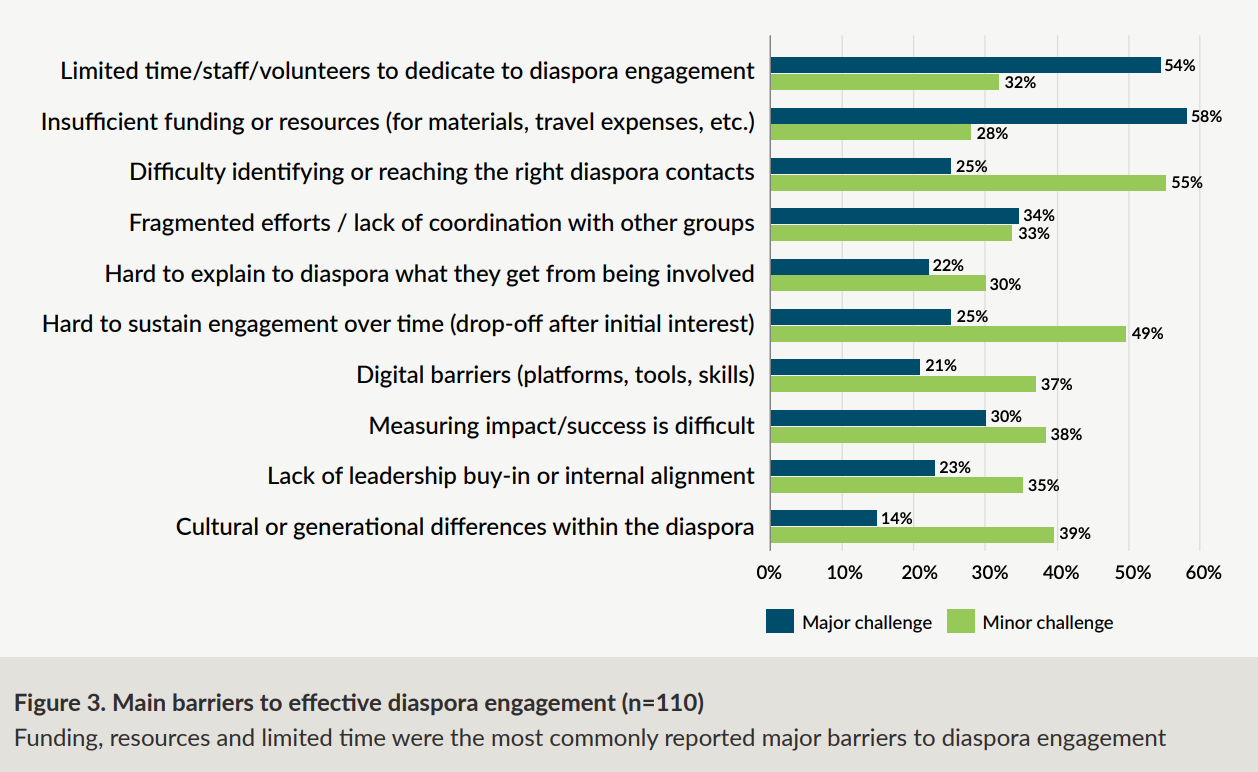
At the same time, one of the clearest findings was that there is both further potential and ambition to do more – the barriers to doing so are practical rather than ideological. The biggest challenges identified were lack of funding, lack of time, limited staffing and volunteer capacity, and fragmented coordination. So the issue is often not convincing communities of the value of diaspora engagement, but enabling them to do it more effectively.
One of the most striking themes in your presentation was that diaspora engagement is fundamentally relationship-led.Why is that such an important finding, and what do people often misunderstand about how these connections actually work?
That is a very significant finding because there can be an assumption that diaspora work is mainly about asking people abroad for something. What this research showed instead is that people engage because they care about where they’re from, or about a particular interest that may also be of great interest to people with roots in the region – something like genealogy or music or sport – or because they feel a sense of friendship and even responsibility towards the people who left.
One quote which really stayed with me was from someone working in a local authority. Part of why she does this work is so that people abroad know that “the people in Leitrim have not forgotten about you. You’re still as important where you are, as you would have been if you had been herewith us.” Of course economic benefits of various kinds sometimes can and do grow out of those relationships, but they are rarely the starting point.
This focus on being relationship-led is also important because it reframes how we think about success in this area. Too often, people approach diaspora engagement transactionally as if the goal is simply fundraising, tourism numbers or attracting investment. It can be all that but is also so much richer and broader than that.
Great examples of these are found in our case studies and perhaps particularly in that of Inishturk Community Club on Inishturk Island off the coast of Mayo. Although it has a resident population of only 60 people, the community is seen as not only being the people currently living on the island. There is in fact a global network of people who care deeply about the island and who are involved in a multitude of ways. For example, one young man with grandparents from Inishturk became involved through the community development newsletter, joined the board, now chairs the heritage group, and has already pursued several funding streams while helping to document island life and argue for the conditions needed to move back. The challenge in this case is not generating emotional connection but continuing to build better structures to turn goodwill into meaningful participation and support.
What people often misunderstand is that these kind of relationships take time. They are cumulative. They are built through ongoing contact, listening, follow-up, shared experiences, friendship and I would also say a good dose of fun too. That is why continuity matters so much.
The research found very strong agreement around the kinds of supports people need most right now. Interestingly, respondents consistently prioritised collaborative and enabling supports over one-off training programmes.
The strongest demand was for opportunities to collaborate with others, for regional networking and peer learning initiatives and for shared infrastructure and practical tools that can be immediately used.
A recurring theme was that many organisations already know what they want to do, but they simply do not have the capacity to sustain it consistently. In volunteer-led organisations especially, people are juggling diaspora engagement alongside many other responsibilities.
Communications support came up repeatedly. Several groups spoke about the need for help with digital outreach, newsletters, social media, databases and contact management. This is especially the case in terms of reaching the ‘unknown diaspora’. Others highlighted the importance of better coordination between organisations so that effort is not duplicated and knowledge is shared more effectively.
The broader lesson is that local energy already exists. The task now is to build the infrastructure that could allow the work that is already being done to be done more effectively and to work towards fulfilling more of the undoubted potential that exists.
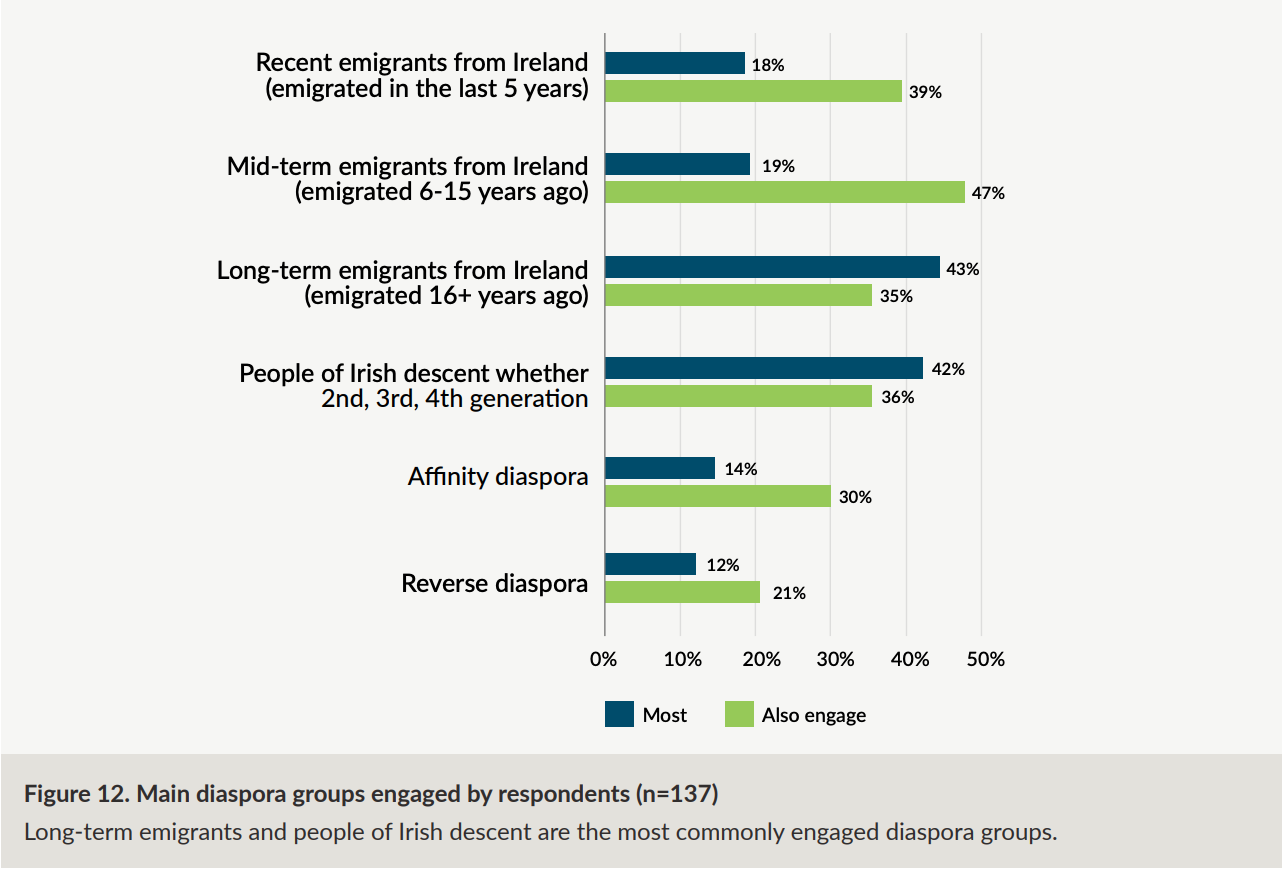
I think one of the strongest lessons for other Celtic nations is that diaspora engagement works best when it is rooted not in systems or top-down initiatives but in the local and in friendships between people. Only 31% of respondents in our research were doing diaspora engagement as part of their paid employment, the majority were doing it as a volunteer with one or more groups or for personal reasons, usually to with a particular interest or locality. The complex web of connections being created and sustained every day simply could not happen without the time and energy of thousands of people and groups within and outside of Ireland. No government or state agency anywhere can replicate what happens when people who are really interested or invested in something connect with one another.
On the other hand, regional development agencies, local governments and other public sector actors such as universities are in a great position to do other important things. They often have more organisational capacity to engage in ongoing information sharing and outreach, to organise or attend important diaspora events and to follow up on promising linkages and opportunities over time, especially in the realm of economic development. They also have a role to play in supporting the efforts of actors from within are as such as local community development, family reunions, sport, culture and local heritage who may lack some of this capacity but are typically strong at local reach and responsiveness and at drawing on personal connections. These are complementary rather than competing models. Diaspora engagement is likely to be strongest where these different roles are supported in ways which are suited to their needs but which are also linked more intentionally.
Finally, there is an important lesson about patience. The most successful examples in the report are long-term and relationship-based. They are built gradually through trust and consistency rather than quick wins.
The report points toward a future role for the Western Development Commission that is mostly about enabling and strengthening what already exists across the region.
One potential next step is the development of stronger regional coordination mechanisms, creating opportunities for organisations to connect, share learning and collaborate more effectively. The strong demand for a regional diaspora summit, peer networking and shared knowledge infrastructure gives a very clear direction of travel.
The report also points toward practical supports such as shared toolkits, communications resources, knowledge hubs and potentially stronger regional platforms for maintaining diaspora connections over time.
Importantly, the findings suggest that the WDC’s greatest value may lie in helping reduce fragmentation, making it easier for the great variety of groups and organisations to learn from one another and operate within a more connected regional framework.
The Western Development Commission will host a public webinar on the 2nd of June at 11:00am to examine the report findings and discuss how communities, agencies and diaspora networks can work together to build the next phase of engagement across the region.
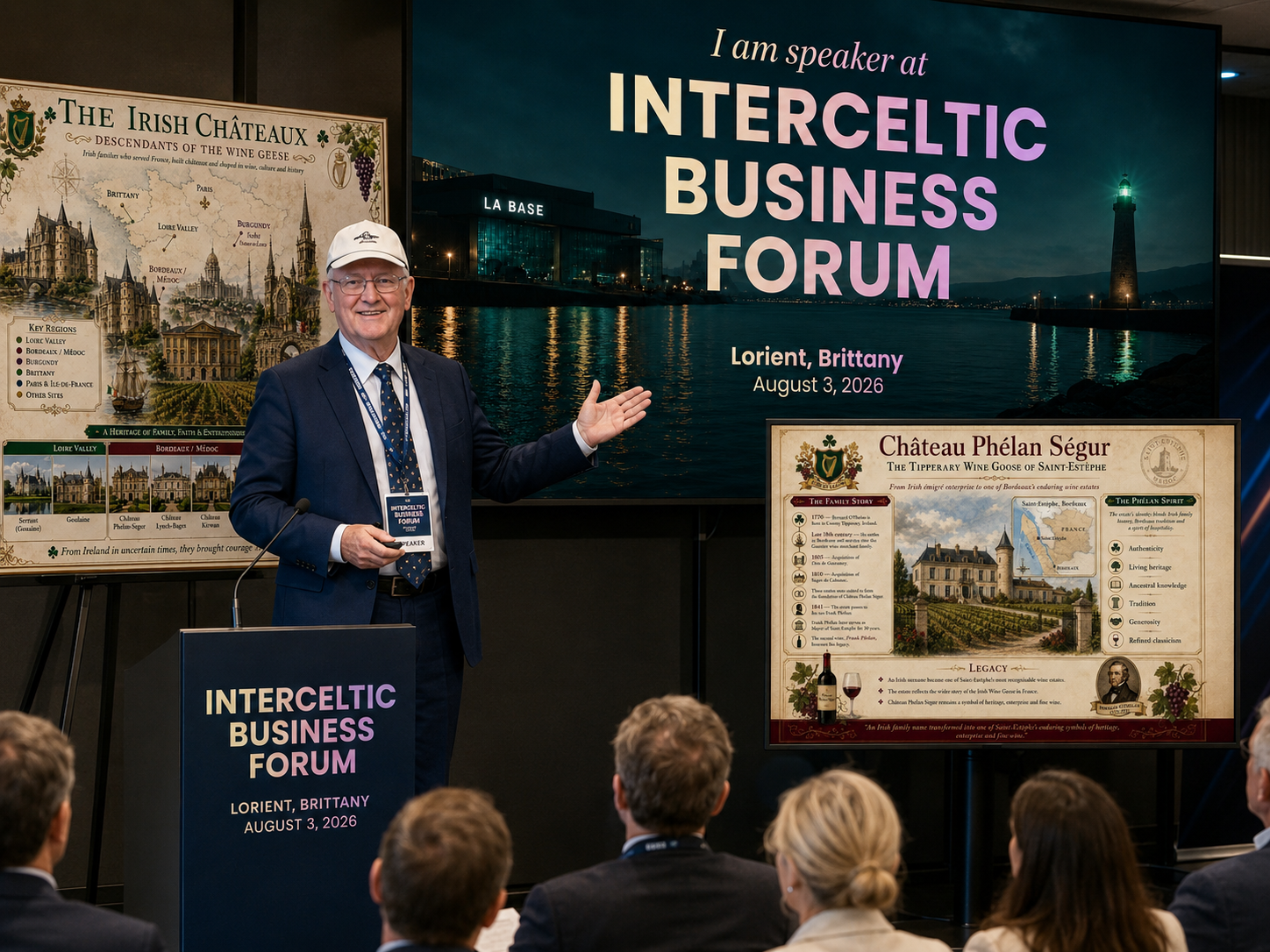
A pictorial history of the remarkable influence of Irish families and Irish châteaux on the French wine industry
Read More%20(1).jpg)
Irish fintech recognised for transforming digital customer experiences with no-code innovation and AI
Read More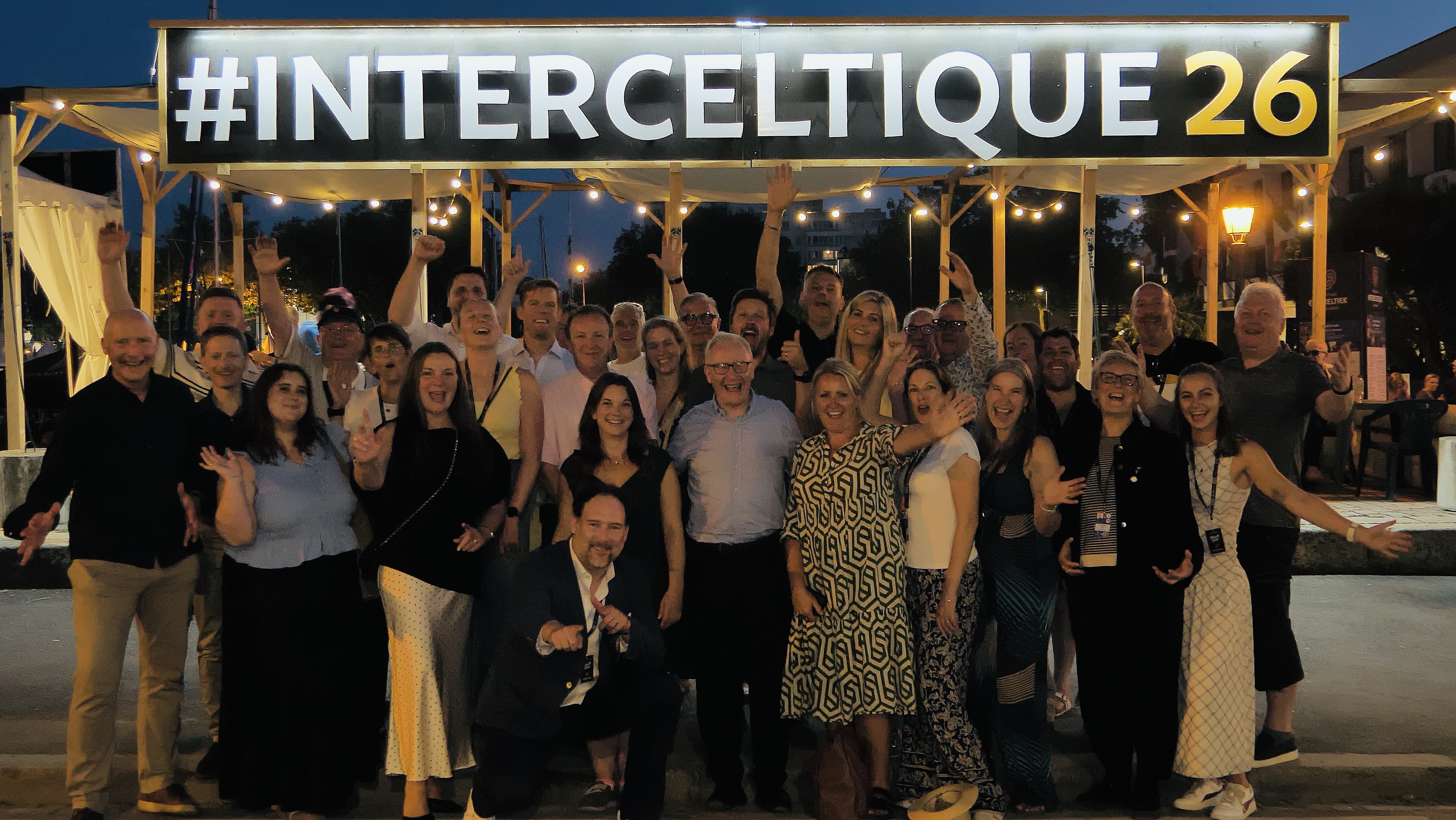
Discover the key insights from the 10th Interceltic Business Forum, where leaders from Brittany, Ireland, Cornwall, the Isle of Man and beyond explored AI, innovation, housing, regional growth and the power of collaboration.
Read More
The Interceltic Business Forum will return to Lorient on Monday, 3 August 2026 for its 10th edition, hosted at CCI du Morbihan during the Festival Interceltique de Lorient.
Read More


