
Tiffany Kerruish of Culture Vannin shares how the Year of the Manx Language is boosting cultural pride, community participation and business engagement on the Isle of Man.
As the Isle of Man prepares to welcome the Interceltic Business Forum 2026, we speak with Tiffany Kerruish, Coordinator of the Year of the Manx Language at Culture Vannin, about the growing role of language in cultural identity, community engagement and business.
With a background in branding and marketing communications, Tiffany brings a fresh and practical perspective to how Manx can be celebrated not only as a vital part of the Island’s Celtic heritage, but also as a living language with relevance for local companies, visitors and future generations.
I wasn’t born on the Isle of Man, but I have Manx family heritage going back hundreds of years. When my family moved back to the Island, I was 13 and had little understanding of Manx culture or language apart from seeing it in our place names – many of which I would struggle to pronounce back then! I had no knowledge of the history of the language or even any basic vocabulary. During the early 90s the Manx language was found in very small community groups and was only just beginning to be promoted through schools again, so there was little opportunity for me to be exposed to it.
Passionate promotors of the language worked tirelessly over the years, and the language steadily increased in visibility and participation. For me it wasn’t until a trip to the Festival Interceltiquede Lorient in 2019 that my interest was sparked and I was set on a new course. Seeing the Isle of Man take its place among the Celtic nations on a recognised and equal footing and hearing the language expressed so beautifully through music and song was what inspired me to ‘lean in’ to the language and deepen my understanding – I wanted to know what the lyrics in songs were and what the names of the tunes I liked actually meant. Becoming more involved in the cultural scene of the Island has given me the opportunity to play Manx music and socialise with the growing number of fluent Manx speakers we have now. These days I am actively learning the language and enjoying the feeling of connection and understanding it brings me. It’s certainly challenging - but incredibly rewarding when you over hear conversations in Manx and you start to figure out what is being said – or when you find Manx written somewhere unexpected and can decipher its meaning.
Professionally, I co-founded a high-profile Manx drinks brand in 2017 that had a very strong Manx identity and positioning. We often used the Manx language to emphasize this in our communications. Life’s twists and turns gave me the opportunity to be Coordinator for the Year of the Manx Language for 2026, a role that combines my professional marketing communications and events background with my passion for Manx culture and language - Taard-haitnys orrym! (I’m delighted!)
Blein ny Gaelgey “Year of the Manx Language” is a year-long celebration organised by Jeebin, the Manx Language network. The year has three aims:
1. To promote a positive image of Manx
2. To increase participation in and usage of Manx
3. To inspire creativity, innovation and establish a lasting legacy for the language.
The Year is for everybody, those who already participate in learning or speaking Manx and those who are curious to learn more. It is also hoped the Year’s events will reach an entirely new audience and encourage participation from diverse communities and sectors of the Island’s population.
Events are being held by many different organisations and groups throughout the year, from small speaker events to a spectacular ‘Drone Show’ above Douglas Bay, the first ever Manx Gaelic opera along with many ways to engage in learning from ‘Taster Sessions’ to a week-long ‘Summer School’ at the end of July.
The year is community driven and everything that is happening is being collated and listed on the www.YearOfManx.im website.
Manx is a Goidelic Celtic language originating from Primitive Irish and has been spoken on the Island for over 1500 years. It evolved into a distinct language with Norse, Scottish and English influence.
Manx Gaelic rapidly declined in the 19th/20th century. The 1970s saw the language saved from the brink of extinction and today there are over 2,500 speakers on the Island and also in other parts of the world.
There are a growing number of young fluent speakers thanks to the Bunscoill Ghaelgagh - the Isle of Man’s Manx language immersion school where pupils are taught the entire curriculum in Manx. In recent years there has been great progress in encouraging more people to take up Manx lessons or attend workshops. The Manxcultural scene is vibrant and fun and increasing numbers of people are recognising the role that language plays in enhancing their connection to theIsle of Man, whether it’s their place of birth or their chosen home.
Participating in the Manx language demonstrates pride in Manx culture which can create a unique identity and celebrates the sense of place. This can bring enhanced loyalty with customers who appreciate these efforts to promote our collective Manx identity. It’s also a fun engagement activity for staff.
Businesses have unique opportunities to promote Manx Gaelic either passively through inclusion of the language in everydayitems such as signage and e-mails – or more proactively via greetings and answering the phone using Manx words. They can also get involved in the many event happenings this year or organise an in-house celebration or Manx taster session for their staff.
To assist businesses with participating in theyear, there is a business section on the www.YearOfManx.im website. There is a toolkit here that offers downloadable bilingual signage for everyday office use. There is also a link to www.learnmanx.com where businesses can find a dictionary of business-related vocabulary and phrases along with audio files providing the correct pronunciations.
In addition to the toolkit, Culture Vannin is launching an initiative called the Mannin Aboo! Passport (Hurray for Manx! Passport) aimed at encouraging local retailers and hospitality businesses to get involved in the year. The passport will be given out at schools and in tourist locations across the Island and will challenge people to visit shops, cafes, restaurants, etc and use simple Manx words or greetings at participating locations.
Stamps will be awarded and once their passport is filled with 18 stamps, they will be able to post it back to enter a prize draw. It’s a simple concept that will be free for everybody to participate inand it will be wonderful to hear Manx being spoken in natural situations outside of the classroom!
I attended the Interceltic Business Forum in 2024 as a speaker representing Manx business so I have seen for myself what a fantastic opportunity this is for Manx businesses and local entrepreneurs to network and connect with delegates from across the Celtic nations, many of whom will have synergies or shared challenges that we can learn from.
Equally, I am sure that many of the delegates attending will be coming to the Isle of Man for the first time and I hope thatthey will enjoy our warm welcome, recognise the opportunities the Island possesses for inward investment, find out about our unique UNESCO Biosphere status as well as experience the culture of our small but mighty Island nation!
GET YOUR TICKETS FOR THE FORUM
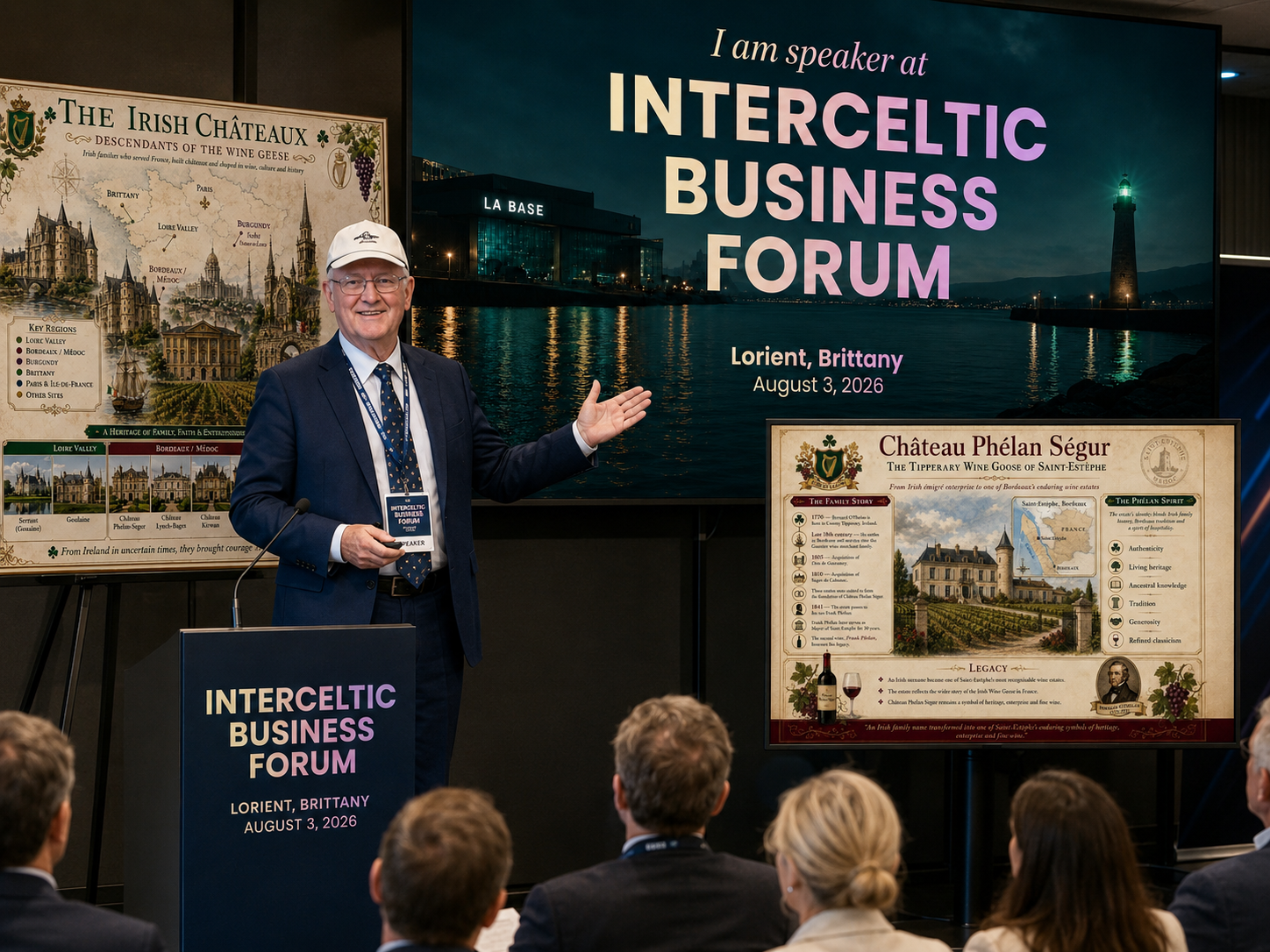
A pictorial history of the remarkable influence of Irish families and Irish châteaux on the French wine industry
Read More%20(1).jpg)
Irish fintech recognised for transforming digital customer experiences with no-code innovation and AI
Read More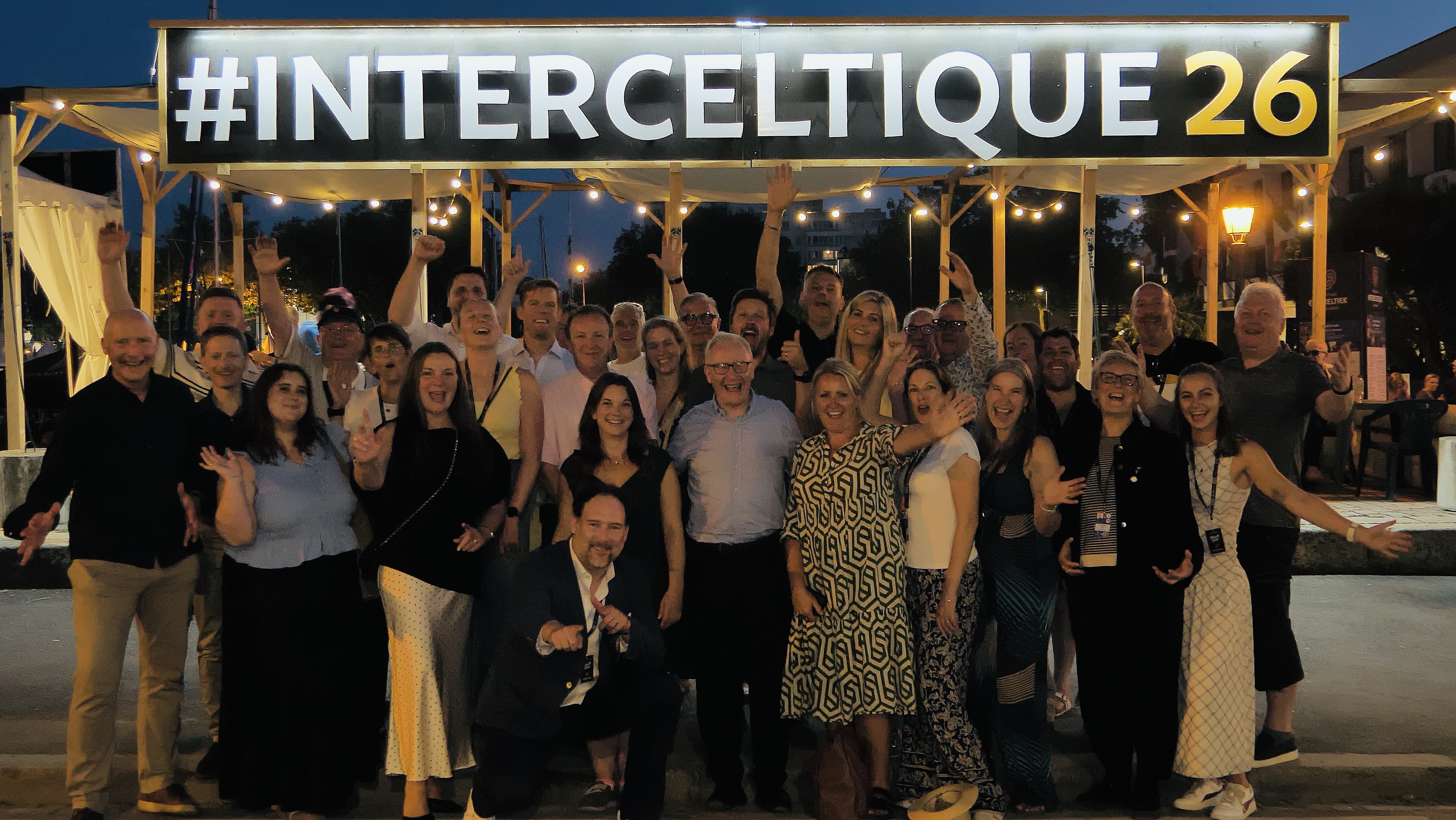
Discover the key insights from the 10th Interceltic Business Forum, where leaders from Brittany, Ireland, Cornwall, the Isle of Man and beyond explored AI, innovation, housing, regional growth and the power of collaboration.
Read More
The Interceltic Business Forum will return to Lorient on Monday, 3 August 2026 for its 10th edition, hosted at CCI du Morbihan during the Festival Interceltique de Lorient.
Read More


