.jpg)
Declan Ivory discusses Fin, AI-powered customer support, Intercom’s evolution from Dublin startup to global company, and the value of the Interceltic Business Forum.
At the latest Interceltic Business Forum on the Isle of Man, Declan Ivory brought a practical perspective on one of the most important business shifts taking place today: the rise of AI-powered customer support.
In this interview, he discusses what Fin is, how businesses are using AI to improve efficiency and customer satisfaction, and what Celtic companies can learn from building globally relevant growth stories from smaller markets.
Fin is an AI customer agent built to handle the full breadth of customer engagement, from the first sales outreach to the full post sales experience. The initial focus for Fin has been as a ‘service agent’, but in recent months we have expanded the ‘roles’ that Fin can undertake, launching Fin for Sales, Fin for Ecommerce, with Fin for Success and other roles in development.
As a service agent, the problem it solves is straightforward: customer expectations have never been higher, but scaling a support team to match demand and these growing expectations is expensive, slow, and hard to sustain. Traditional chatbots tried to address this, but mostly frustrated people with scripted responses that rarely actually answered the question. Fin is different because it genuinely resolves and completes actions. It understands context, handles complex multi-step queries, and gives customers accurate answers in seconds, around the clock.
For many of our customers, Fin handles 70/80% of inbound support requests autonomously. That frees human agents to focus on the work that genuinely benefits from human judgment i.e. the complex, the sensitive, and the high-stakes interactions.
A few things stand out. First, there's the product instinct; Intercom (now Fin) was founded on a genuine insight about how the internet was changing the relationship between businesses and their customers, and that conviction has stayed consistent through every phase of growth.
Second, Dublin has become a genuinely strong hub for building internet-scale software companies. The talent base is deep, the ecosystem has matured enormously, and there's a culture of ambition that I think is sometimes underestimated from the outside. When you can attract world-class engineers and product people in the same city, that compounds quickly.
And thirdly, something I'd point to that doesn't get said enough, is the willingness to serve the world from day one. Intercom never treated the Irish or European market as a stepping stone. The product was built for any internet business, anywhere. That instinct to think globally while staying rooted in Dublin is something I think more companies here could lean into.
There has been a major shift in recent times, with a very strong adoption of AI agent technology for customer service. Recent research that we carried out, and available in our Customer Service Transformation Report, indicates that 83% of businesses are trying AI for customer service, although only 10% have deployed at depth (but this number is accelerating fast in 2026). Companies are moving past the first generation of chatbots i.e the rigid, decision-tree-style tools that often frustrated customers as much as they helped, and are starting to deploy AI that can genuinely hold a conversation and resolve issues in a contextual and personalised way.
The efficiency gains are real and they're significant. When Fin resolves 80%+ of inbound support requests automatically, it doesn't just reduce cost, it changes the nature of the support team's work entirely. Your agents are no longer triaging volume; they're handling the genuinely complex problems, the escalations, the high-value relationships.But the customer experience gains are the part I find most compelling, and they often surprise people. The assumption has always been that customers prefer talking to humans. What we've found is that customers prefer fast, accurate answers, and they're completely happy getting those from AI.
What they don't forgive is waiting. The speed, availability, and quality of experience dimensions of Fin are often the biggest drivers of improved customer satisfaction. One area where companies still leave value on the table is in not investing enough in the quality of their knowledge content before deploying AI. Fin is only as good as what you give it to work with. That foundation of clear documentation, well-structured support content, is often the real unlock.
The most common one is treating AI as a cost-cutting exercise rather than a customer experience transformation. You can absolutely reduce cost with AI in support, but if that's the only lens you're optimising through, you'll make the wrong decisions. You'll use AI to block customers from reaching you rather than to genuinely resolve their problems faster and better. Customers can feel that distinction immediately.
The second mistake is expecting out-of-the-box perfection. AI in support requires iteration. You need to be measuring resolution rates, looking at where the AI is getting stuck, feeding that back, and improving. The companies that get the most from Fin are the ones that treat it as a product in its own right, with an owner, with metrics, with a continuous improvement cycle.
And the third is underestimating the change management internally. Support teams sometimes experience AI as a threat rather than as a tool that makes their work more interesting. In practice, the teams that embrace it well find their people becoming more senior over time e.g. handling escalations, advising customers, building relationships, rather than spending eight hours a day responding to mundane support requests. But you have to be very intentional about bringing your team along on that journey.
What I value most is the reminder that the challenges of building and scaling a business from a smaller, peripheral market, and I mean that in a geographic rather than an ambition sense, are shared ones. Whether you're in Dublin, Edinburgh, Cardiff, or Galway, you're thinking about the same things: how to compete for talent with the major tech centres, how to find your first international customers, how to build something that can punch well above its weight.
There's something particularly useful about conversations that cut across sectors and borders within the Celtic world. We have more in common than is obvious on the surface e.g. the culture, the scale of businesses we're building from, the export mindset that comes from operating in small domestic markets.
The forum creates a space to learn from people solving adjacent problems in adjacent places, and that cross-pollination is genuinely valuable in ways that a single-sector or single-country event isn't. For me personally, it's also a good reminder to stay connected to the broader community of people building things here, rather than living entirely inside the world of AI and customer support. Some of the most useful things I've taken from conversations like this have been the unexpected ones e.g. an approach from a completely different industry that turns out to be directly applicable to what we're doing.
Get your ticket now!
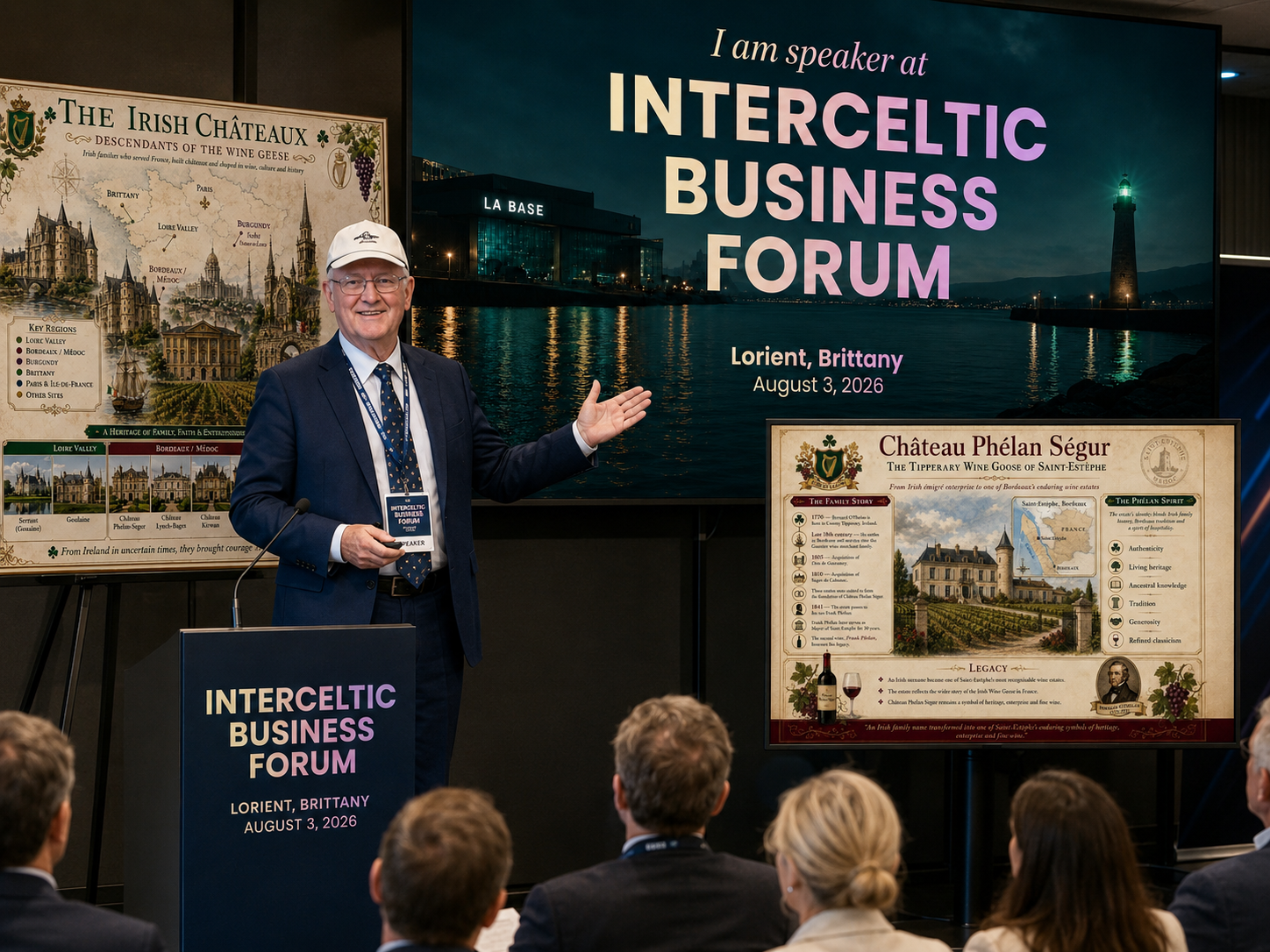
A pictorial history of the remarkable influence of Irish families and Irish châteaux on the French wine industry
Read More%20(1).jpg)
Irish fintech recognised for transforming digital customer experiences with no-code innovation and AI
Read More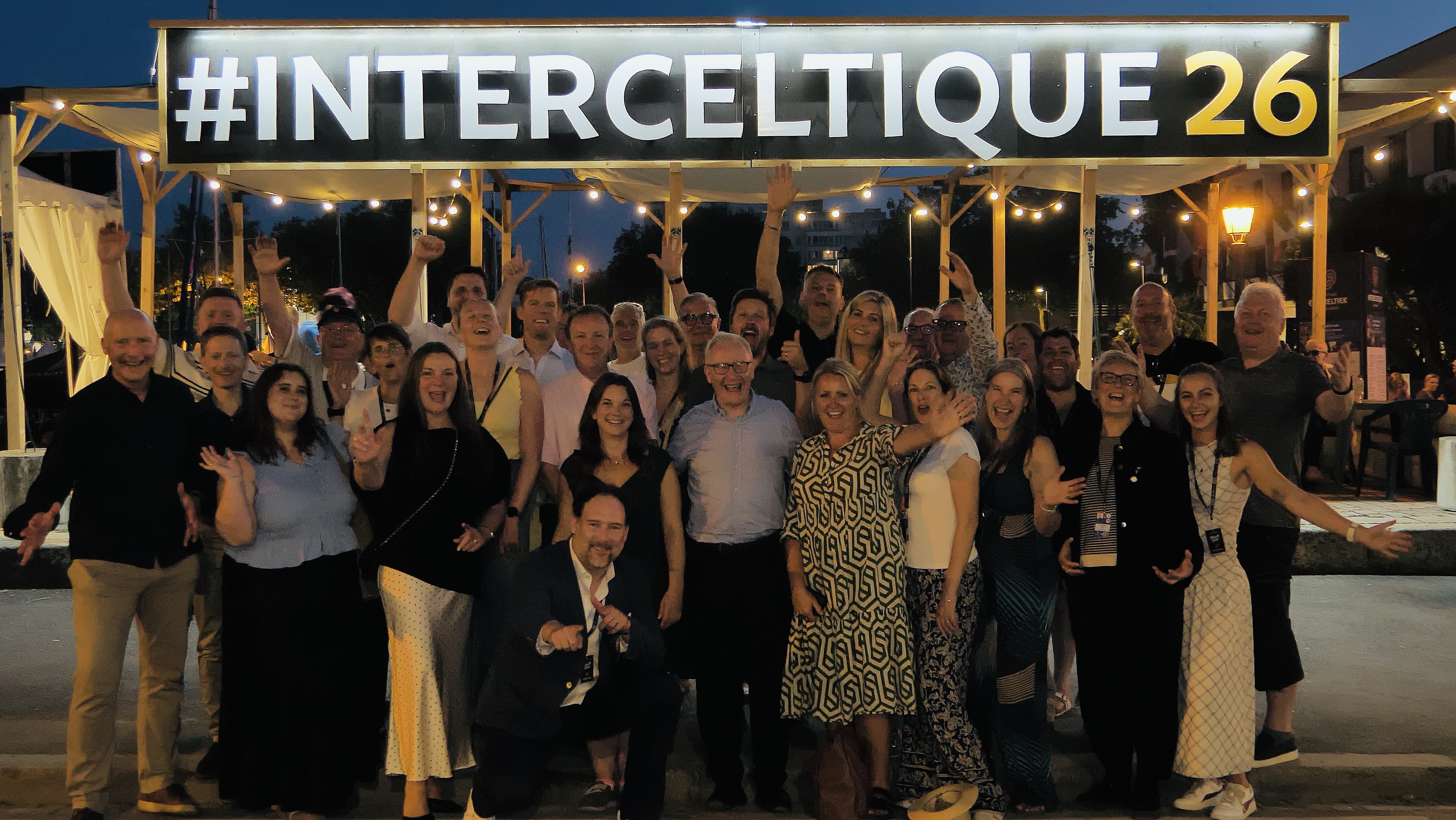
Discover the key insights from the 10th Interceltic Business Forum, where leaders from Brittany, Ireland, Cornwall, the Isle of Man and beyond explored AI, innovation, housing, regional growth and the power of collaboration.
Read More
The Interceltic Business Forum will return to Lorient on Monday, 3 August 2026 for its 10th edition, hosted at CCI du Morbihan during the Festival Interceltique de Lorient.
Read More


